
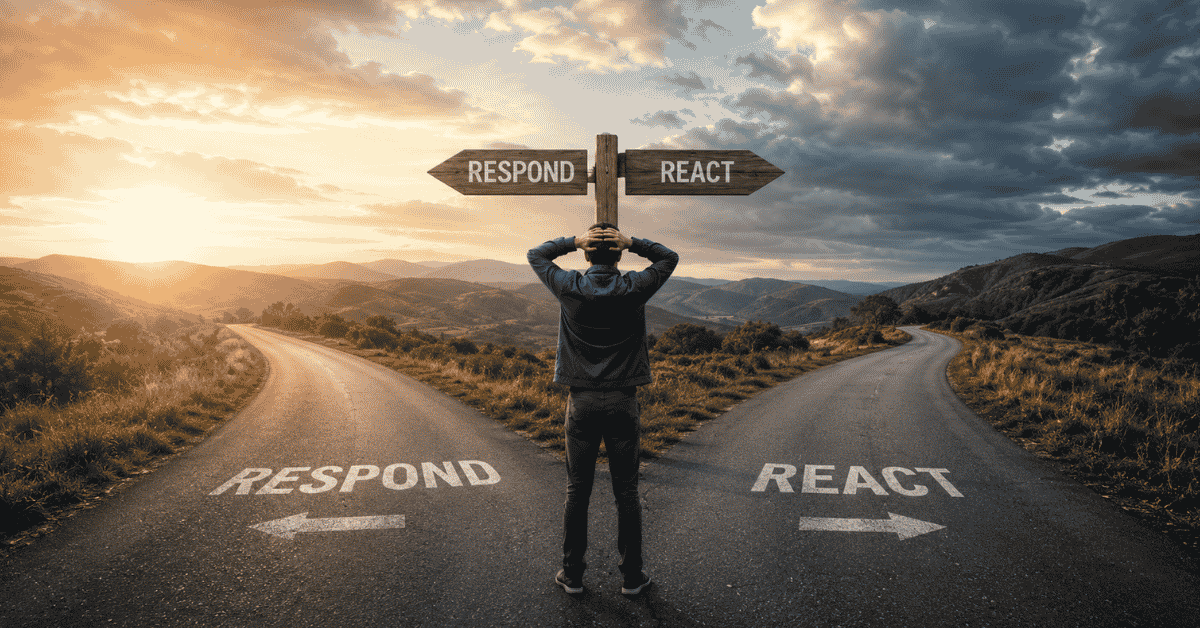
Many people say, including me, that choosing to respond vs react is always available to you in any situation. I even spoke about this in a recent blog post.
Well, I want to share an experience that I had that made me realize why it is so challenging to put into practice.
I won’t bury the lead with this one, it’s the nervous system. At least this was true in my experience, which I’ll share with you now.
The Truth About Emotional Triggers and the Nervous System
I was driving on a winding road set up very high on the side of a mountain. Needless to say, I was in a state of high alert with my 10 and 2 death grip on the wheel.

A truck came speeding through going the opposite direction.
I immediately said, “please drive safely friend”.
Full transparency, this surprised me. I usually get angry when I see this behavior on the road. It’s something I’ve been consciously working on for a few years.
I joyfully continued on, embracing this new experience while driving.
Maybe 30 seconds later, I come to a complete stop. A car parked at an overlook spot was trying to leave, but was blocking the entire lane of oncoming traffic. As I was slowing down, I noticed there were a bunch of young guys and other cars there.
I patiently waited.
Shortly after, I started noticing myself getting irritated.
Because I just had the experience prior, it made me pause and take notice.
Why is this making me angry? He’s just trying to leave, while the other driver was being reckless.
As I sat with it, through my peripheral vision, I noticed a man standing at the side of my car facing me.
I didn’t consciously clock it initially, but my nervous system did.
The Challenge Of Choosing to Respond vs React
At that moment, I realized that I get angry while driving when I don’t feel safe.
I know it’s a wound of mine and in that moment, I realized how much it was unconsciously running the show.
I also kind of laughed because it seemed so obvious after this moment of realization. Have I really never put that together or was I just only now embodying the understanding of it?
Working in eating disorders, I worked with a lot of trauma and thus had a great deal of training around the nervous system.
However, this experience made me realize at a much deeper level how our wounds are running the show more than we even realize.
It is because of this, that we might find it difficult to pause and respond in a situation where we feel triggered or activated.
Moving from Reaction to Curiosity: How to Rewire Your Responses
I don’t have any answers for you at this time, but I will share how I’m exploring it.
Reacting from a wound is not as common for me these days as I’m surrounded by trees and very few people. So for me, I’m able to notice it clearly in the moment and get curious. It’s not every time, but it’s happening more frequently. And I’m very grateful for that.
And if I do get swept up in the wound, I can relatively quickly ground myself and explore it. What serves me best is to explore it for the lesson or lessons in the experience, which is essentially what this blog is now all about.
Overall, my intention is to bring awareness to the reaction to:
- see and eventually heal the wound
- allow my nervous system to recalibrate
- build new neural pathways.
The Window of Tolerance: Why Bandwidth Matters
One more layer to this equation, for me at least, is bandwidth. Two back to back experiences within 1 minute on an already precarious road was clearly outside of my window of tolerance.
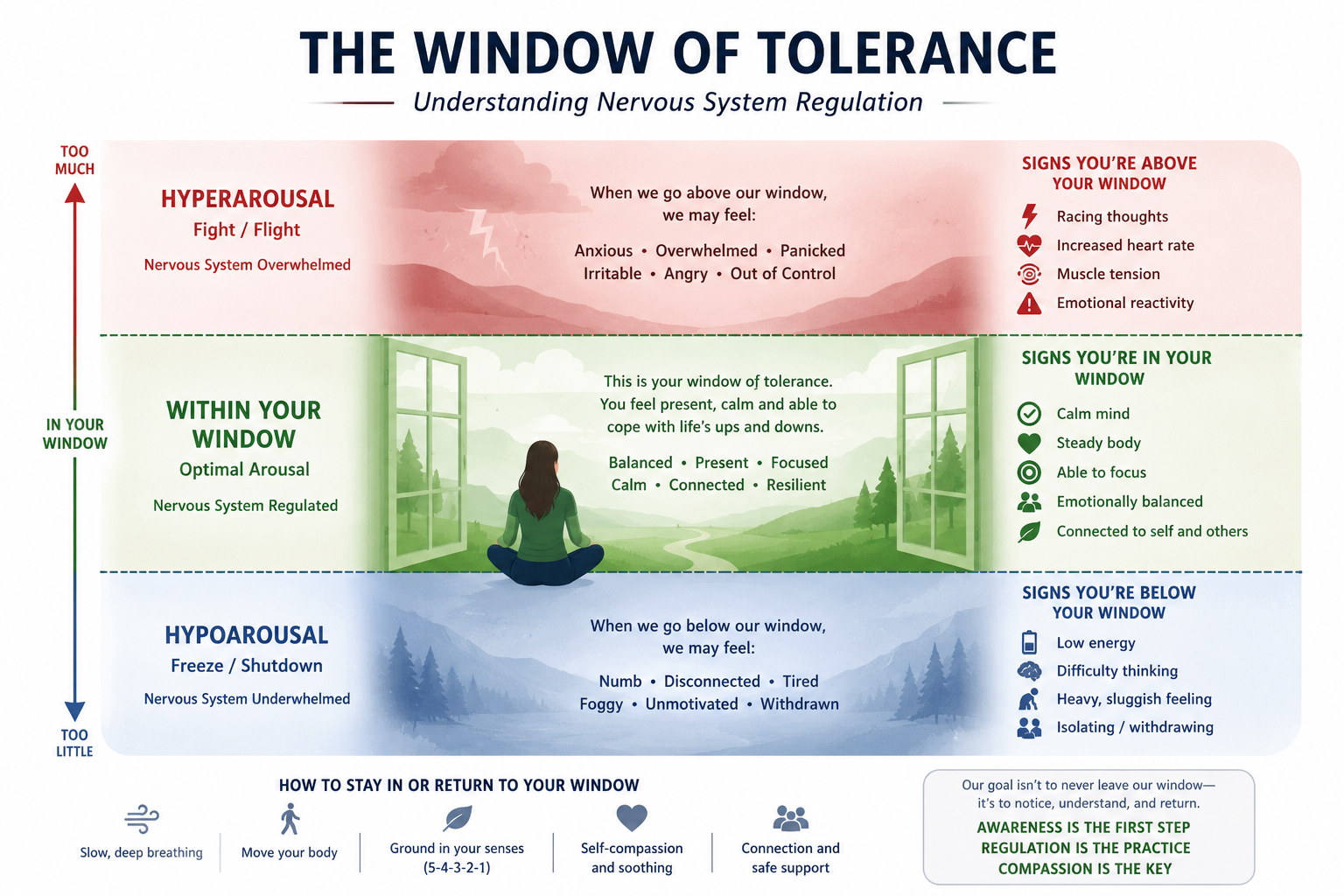
However, I only recognized this about 1 month later. For the very first time, I drove peacefully to my mom’s at the Jersey Shore. It was raining and there was a lot of traffic and yet I remained unaffected.
But the drive took longer than usual and I finally lost my cool in the last 15 minutes.
I say this because there are so many interwoven levels and layers that contribute to every moment we experience. And…my experiences are uniquely mine.
So I invite you, if this resonates, to use this as information to guide you on your own journey of healing.
The next time you react, is it an invitation to go within and heal?
Until next time friends, stay curious!
You Might Enjoy:
- Divine Timing On The Road: What A Reckless Driver Taught Me
- The Power of Choice: Part 1
- The Power of Choice Part 2
- From People-Pleasing to Presence: A Healing Unfolding
Creative Offering:
If these words serve you, let them fly.
If you teach from them, may they bloom again.
Credit is kind. Integrity is everything.
Blair is a registered dietitian, certified intuitive eating counselor, E-500 RYT and Reiki Master. She integrates spirituality with modern day science to help people heal and reclaim their relationship with their body and food.
Disclaimer:
These are my current musings. This content is intended for informational and inspirational purposes only and does not constitute medical, psychological, or therapeutic advice, diagnosis, or treatment. Always seek the support of a qualified healthcare provider or mental health professional regarding any concerns or conditions.